
Community Conversations for Democracy Series #1
April 11, 2026, 10am-12pm
Kingston Village Green
Our inaugural event for Community Conversations on Democracy is on the topic of Immigration. For this event we will have a panel discussion with three distinguished guests:
Ross Coen is a Lecturer in the History Department at the University of Washington, where he received his PhD in 2021. Among the courses he teaches at UW is one focused on the history of U.S. immigration and citizenship from the colonial era to the present. He is the author of three books and several scholarly articles on the political, social, and environmental history of the American West.
Malou Chávez
Executive Director
Northwest Immigrant Rights Project
Jessica E. Salvador, Ph.D.
Executive Director
Kitsap Immigrant Assistance Center
The event will begin with introductions and introductory words by the panelists, followed by questions and comments from the audience.
Recording
A recording of the presentation portion of the event is available here.
Further Resources
Available handouts:
Facts and Figures Background Notes
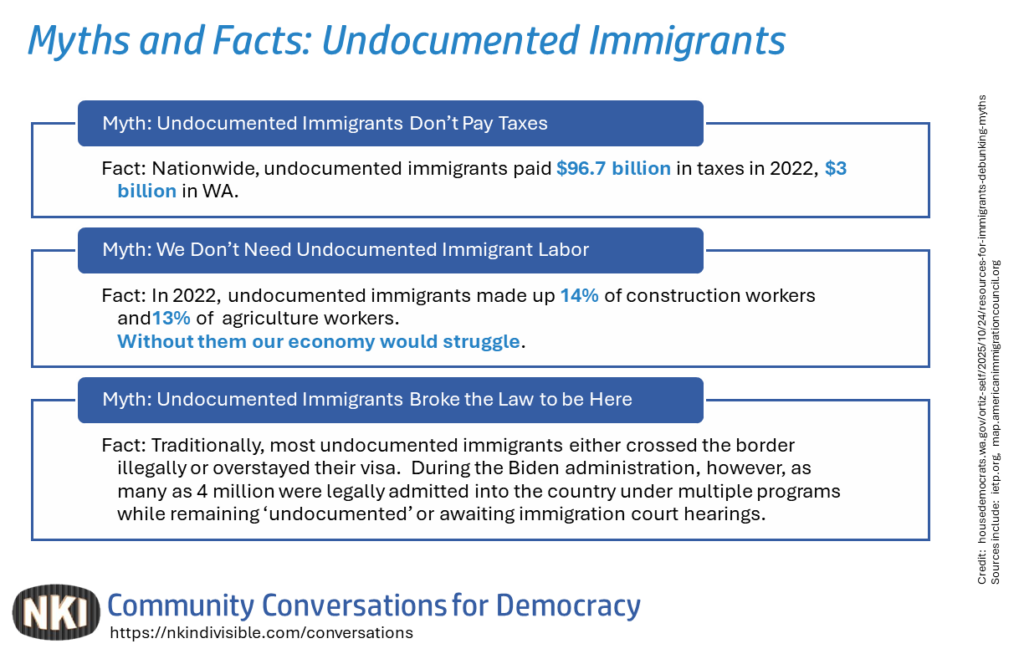
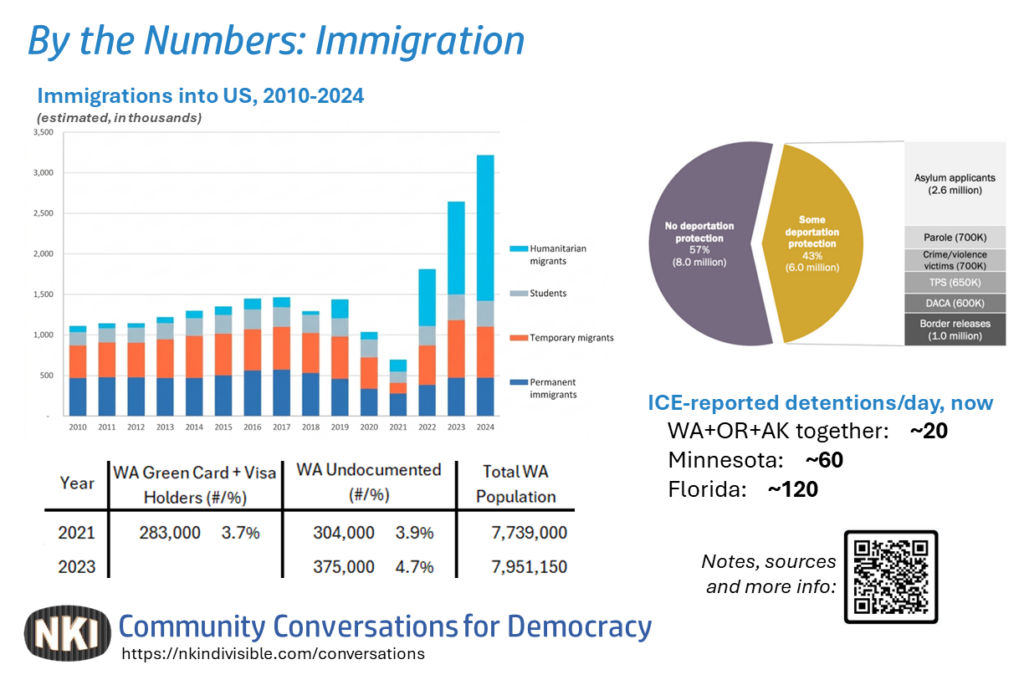
NKI prepared a handout with a few immigration statistics. In this section we’ll go over a few of the sources and some important contexts to these figures.
Defining “Undocumented”
Different sources will use terms like “undocumented person”, “unauthorized person” or “illegal alien”. Usually the meaning is the same: an individual who is not a US citizen and also does not possess a valid green card (permanent residency) or visa (workers, students, tourists).
What makes the designation more complicated is that undocumented persons may have entered the country legally through an official port of entry. There are a many programs by which this can occur, amongst the largest of which are asylum seekers. Once here, undocumented individuals, whether they arrived through legal border crossing or otherwise, may convert to another status. For example, an undocumented person may seek asylum after entering the country.
This gives rise to the pie chart above, which uses the phrase “Some deportation protection” to indicate individuals who are undocumented, but nonetheless are in the country legally according to our laws.
Counting Immigrant Population
Understanding immigrant population is complicated by a few things:
- Almost all population data, from all sources, is delayed by a 1-2 year time lag, so usually the most recent obtainable data is from 2 years prior.
- Pretty much all estimates of immigrant populations have been based on the ACS surveys conducted by the US Census Bureau on a yearly basis. These are then analyzed against known data to produce an estimate of population by various demographics, including immigration status.
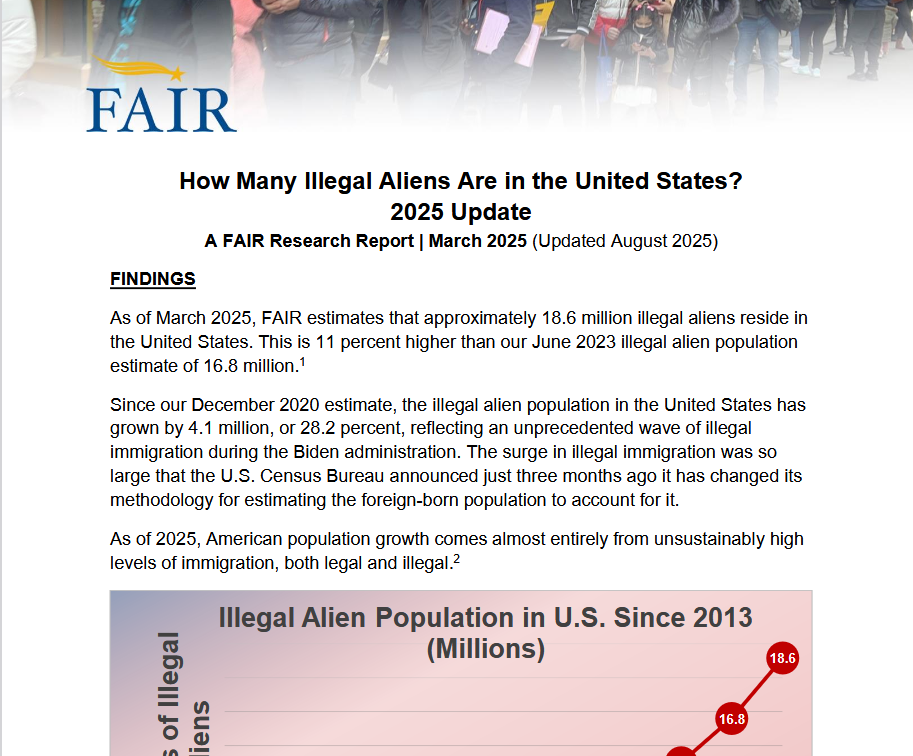
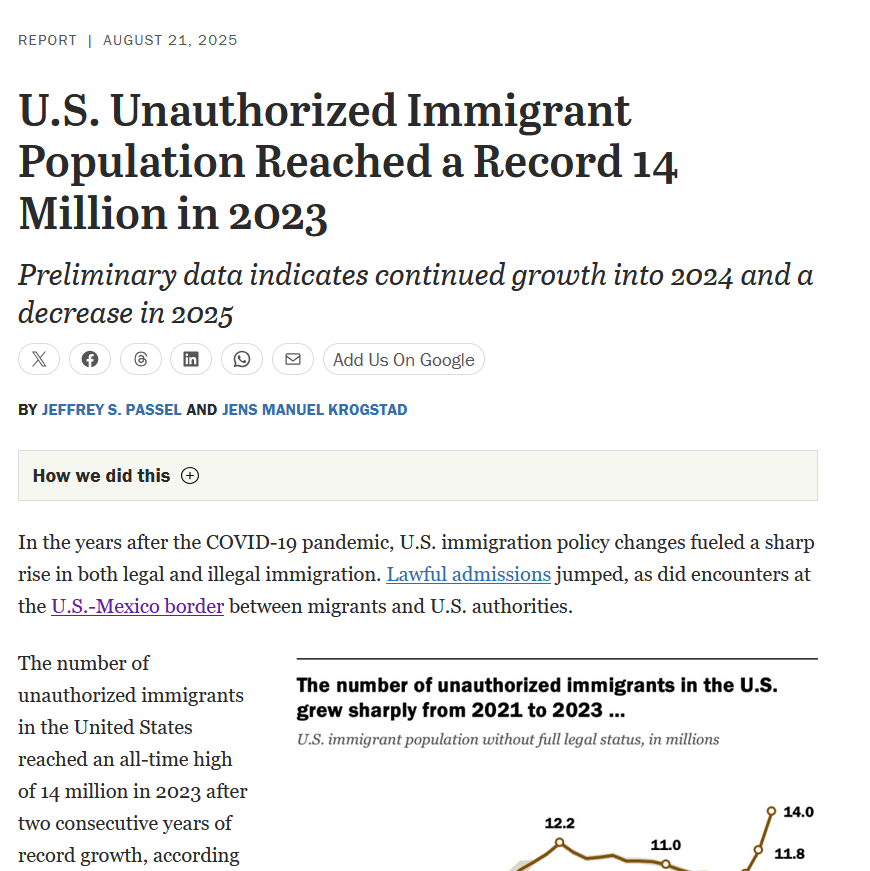
- There are two known failings to this technique for estimating immigration population: (1) immigrants, especially undocumented immigrants, may try to avoid the survey, and (2) even those that do consent to the survey may give misleading information about their status. Much of the analysis that goes into producing immigrant population estimates consists of ways to correct for (2), and are believed to do so largely correctly. However the degree of undercount due to (1) is unknown, and estimates used are largely guesses. This produces the largest factor of disagreement between multiple sources.
For the data in our handout, we primarily used these two excellent reports below, one by a progressive organization (Pew Research) and one by an immigration-reform advocacy group (FAIR). We also used some statistics from the State of Washington.
ICE Activity
The source we used for ICE activity was the New York Times article “New Data Shows Where Ice has been Most Active This Year”, March 20, 2026. This is behind a paywall, but we reproduce one of it’s key figures below.
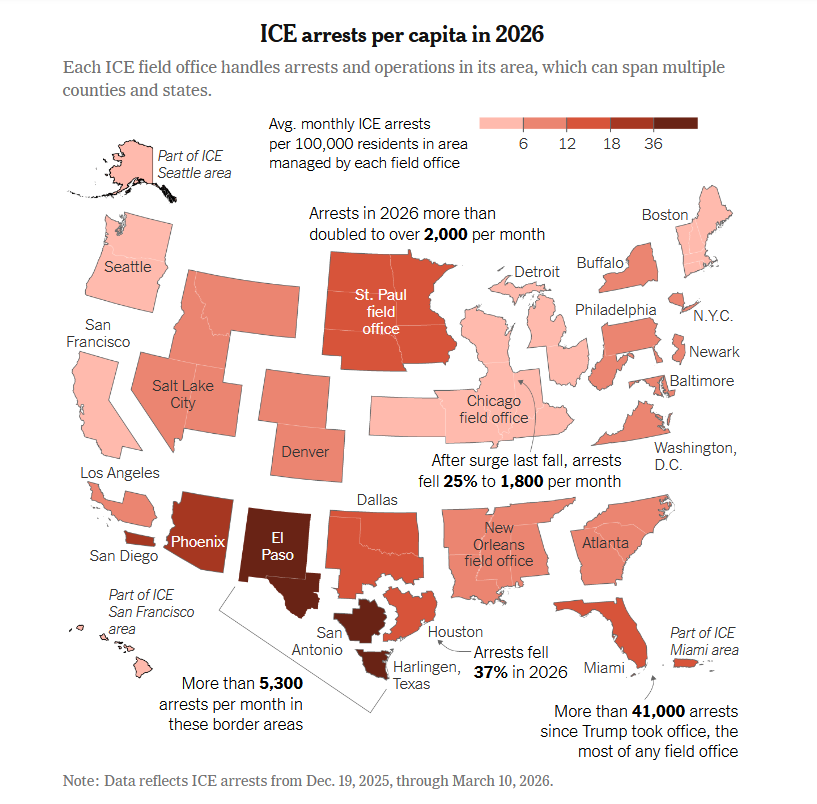
In addition, ICE itself publishes summary statistics (spreadsheet at bottom of the page). For more detailed analysis, The Deportation Data Project publishes anonymized data retrieved via FOIA from ICE.
Taxes Paid by Immigrants
The “Myth and Facts” section of our handout is based on Rep Ortiz-Self’s “Debunking Myths” page.
She in turn is using data from the American Immigration Council, a pro-immigration advocacy group, and an ITEP (Institute on Taxation and Economic Policy) report from 2024: “State and Local Tax Contributions by Undocumented Immigrants”.